
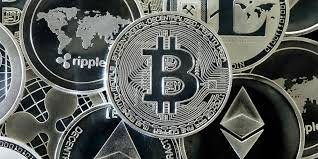
How a technology born in the margins of finance is quietly rebuilding the infrastructure of trust, ownership, and value exchange across the entire global economy.
In 2008, an unknown person — or group — published a nine-page document that proposed a radical idea: what if two strangers on opposite ends of the earth could exchange value without asking anyone for permission? No bank. No government. No intermediary of any kind. Just mathematics, cryptography, and a shared ledger that nobody owned and everybody could read. That document was the Bitcoin white paper. And the idea it seeded has grown into something far larger, far stranger, and far more consequential than even its most ardent early believers imagined.
Blockchain is, at its core, a deceptively simple concept: a database that is simultaneously maintained by thousands of independent participants, where every entry is permanent, transparent, and tamper-proof. But simple concepts, applied at scale, can be world-altering. The printing press was just a machine that pressed ink onto paper. The internet was just a protocol for routing packets. Blockchain is just a ledger. And it may reshape as much as either.
| $67T
PROJECTED BLOCKCHAIN MARKET VALUE BY 2030 |
180+
COUNTRIES EXPLORING BLOCKCHAIN INFRASTRUCTURE |
$2.8T
TOTAL VALUE LOCKED IN DEFI PROTOCOLS |
01
Beyond Bitcoin: The Maturing of a Technology
For most of its existence, blockchain was synonymous with Bitcoin — and Bitcoin was synonymous with speculation. The narrative was dominated by price charts, exchange scandals, and breathless predictions about what a single coin might one day be worth. This framing was simultaneously accurate and deeply misleading. It captured the most visible surface of the technology while obscuring its structural significance.
The emergence of Ethereum in 2015 changed everything. By introducing programmable smart contracts — self-executing agreements written directly into the blockchain — Ethereum transformed a payment network into a global computation platform. Suddenly, the blockchain could do more than record who sent what to whom. It could enforce the terms of an agreement, automate the release of funds, govern the rules of an organization, and represent ownership of anything — from a piece of art to a fraction of a building to a voting right in a corporation.
Today, the ecosystem has diversified into dozens of competing and complementary networks. Solana prioritizes speed. Polkadot enables interoperability. Avalanche focuses on enterprise adoption. Layer 2 networks like Arbitrum and Optimism extend Ethereum’s capacity by orders of magnitude. The infrastructure is maturing. The developer tooling is improving. The institutional capital is arriving. The adolescence of blockchain is ending.
02
DeFi: Finance Without Gatekeepers
Decentralized Finance — DeFi — is what happens when you take every core function of the financial system and rebuild it on open, permissionless blockchain infrastructure. Lending, borrowing, trading, earning yield, issuing synthetic assets, managing risk — all of it executed by code, governed by token holders, and accessible to anyone with an internet connection and a digital wallet.
The numbers are striking. At its peak, DeFi protocols held over three trillion dollars in locked value. More significant than the peak, however, is the floor: even after multiple cycles of euphoria and collapse, the fundamental utility of decentralized lending and trading protocols has proven durable. Aave, Uniswap, Compound, and their successors continue to process billions in daily volume without a single employee, a single CEO, or a single corporate headquarters.
“DeFi is not a replacement for traditional finance. It is a forcing function — a permanent demonstration that many things finance charges for can be done cheaper, faster, and more transparently by open code.”
The regulatory response has been predictably fraught. Regulators in the United States, Europe, and Asia are wrestling with entities that have no legal domicile, no identifiable leadership, and no capacity to comply with requirements designed for centralized institutions. The resolution of this tension — and it will be resolved, one way or another — will shape the financial architecture of the next generation.
03
NFTs, Digital Ownership, and the Creator Economy
Few blockchain developments have attracted more ridicule than the NFT boom of 2021 and 2022. Profile pictures of cartoon apes selling for millions of dollars. Digital files of questionable artistic merit changing hands for sums that defied comprehension. The mockery was, in many instances, entirely warranted.
But to dismiss the underlying concept because of its most absurd early applications would be a mistake of the same order as dismissing the internet because of the dot-com bubble. The core innovation of NFTs — the ability to establish verifiable, transferable ownership of a unique digital asset — is genuinely significant. It solves a problem that has plagued the digital economy since its inception: the inability to create scarcity in an environment of infinite reproduction.
The meaningful applications are already emerging beneath the noise. Musicians using NFTs to sell direct-to-fan licenses, reclaiming revenue that streaming platforms capture. Game developers building economies where players genuinely own their in-game assets and can trade them freely. Ticketing companies using blockchain to eliminate scalping and fraud. Real estate platforms fractionating property ownership. Supply chain operators using NFT-like tokens to track the provenance of luxury goods, pharmaceuticals, and agricultural products.
The speculative frenzy has passed. The infrastructure remains. And it is being quietly deployed in places that will eventually affect hundreds of millions of people who will never know — and never need to know — that blockchain is involved.
“The most important applications of blockchain will be the ones nobody is talking about yet — the invisible infrastructure beneath industries that seem to have nothing to do with crypto.”
— WORLD ECONOMIC FORUM TECHNOLOGY OUTLOOK, 2025
04
Enterprise Blockchain: The Quiet Revolution
While public blockchains attract most of the attention, a parallel and arguably more consequential transformation is underway in enterprise settings. Major corporations — IBM, Walmart, Maersk, JPMorgan, HSBC — have been quietly deploying blockchain infrastructure for years, solving specific, unglamorous problems that happen to represent enormous amounts of friction in global commerce.
Walmart’s Food Trust network uses blockchain to trace the origin of produce from farm to shelf in seconds rather than days — a capability that proved its worth during multiple food safety crises. Maersk’s TradeLens platform digitized the labyrinthine paperwork of global shipping, reducing document processing time from days to hours. JPMorgan’s Onyx network settles interbank transactions with a speed and finality that legacy systems cannot match.
These are not experiments. They are production systems processing real transactions at scale. They do not make headlines because they are designed to be invisible — to do their work without calling attention to themselves. But they represent the leading edge of a transformation in how the world’s most complex institutions manage trust, verify identity, and exchange value.
05
CBDCs and the Sovereign Response
Governments did not miss the implications of blockchain. They watched Bitcoin grow from a curiosity to a geopolitical variable, and they drew conclusions. The response — Central Bank Digital Currencies, or CBDCs — is one of the most consequential monetary experiments in modern history.
Over 130 countries, representing more than 98 percent of global GDP, are currently exploring or developing CBDCs. China’s digital yuan is already in wide circulation, processing hundreds of billions of renminbi in transactions annually. The European Central Bank is advancing the digital euro. The United States Federal Reserve has been more cautious, but the political and economic pressure to develop a digital dollar is intensifying.
CBDCs are not the same as Bitcoin or Ethereum. They are government-issued, government-controlled, and designed to extend state monetary authority into the digital domain — not to circumvent it. The tension between sovereign digital currencies and decentralized alternatives will be one of the defining monetary contests of the next decade. The outcome will determine how much financial privacy, autonomy, and censorship resistance ordinary citizens retain in an increasingly digital economy.
“The tension between sovereign digital currencies and decentralized alternatives will be one of the defining monetary contests of the next decade.”
06
The Scalability Problem — And How It’s Being Solved
For all its promise, blockchain has a fundamental engineering challenge: the trilemma of security, decentralization, and scalability. In the original Bitcoin and Ethereum designs, you could have two of the three. Achieving all three simultaneously at global scale was considered, for many years, an open problem.
The solutions being deployed are varied and ingenious. Layer 2 networks process thousands of transactions off-chain and periodically settle their state on the base blockchain, achieving throughput that rivals traditional payment networks. Zero-knowledge proofs — a cryptographic technique that allows one party to prove knowledge of information without revealing the information itself — are being applied to compress massive amounts of computation into tiny, verifiable proofs. Sharding divides the blockchain into parallel processing lanes, multiplying capacity without sacrificing security.
Ethereum’s transition from proof-of-work to proof-of-stake in 2022 — the Merge — reduced the network’s energy consumption by over 99 percent and laid the groundwork for the scalability improvements that followed. The narrative of blockchain as an environmental catastrophe, while once partially justified, is increasingly obsolete. The infrastructure is becoming leaner, faster, and more efficient with each successive upgrade cycle.
07
What This Means for Brands and Businesses
For business leaders and brand strategists, blockchain presents a challenge that is simultaneously technical and philosophical. The technical dimension is tractable: identify use cases where verifiable, decentralized record-keeping creates genuine value — supply chain transparency, digital asset issuance, loyalty program interoperability, IP rights management — and build accordingly.
The philosophical dimension is harder. Blockchain, at its deepest level, is a technology of dis-intermediation. It is designed to remove the middlemen — the banks, the platforms, the aggregators — who currently extract value from being trusted third parties. For businesses that derive competitive advantage from controlling proprietary data or being the only trusted record-keeper in a market, blockchain is not an opportunity. It is a threat.
The brands that will thrive in a blockchain-enabled economy are the ones that derive their value from things that cannot be commoditized by a shared ledger: creative vision, human relationships, institutional expertise, cultural relevance. They will use blockchain as infrastructure — the way businesses use TCP/IP without thinking about it — rather than as an identity. The technology will recede into the background. The brand will remain.
“Blockchain will recede into the background. The brands that endure are the ones whose value was never in the ledger to begin with.”
The most important question for any organization is not ‘should we adopt blockchain?’ It is ‘what do we trust, and what do we want others to trust about us?’ Blockchain is a tool for answering that question at scale. What you do with the answer is a strategy problem — and strategy is still, irreducibly, a human endeavor.
The future of blockchain is not a future of speculation and white papers. It is a future of invisible infrastructure — of trust baked into systems so thoroughly that people use it without knowing it is there. Like electricity. Like the internet. Like every transformative technology that eventually stops being a technology and starts being the world.